
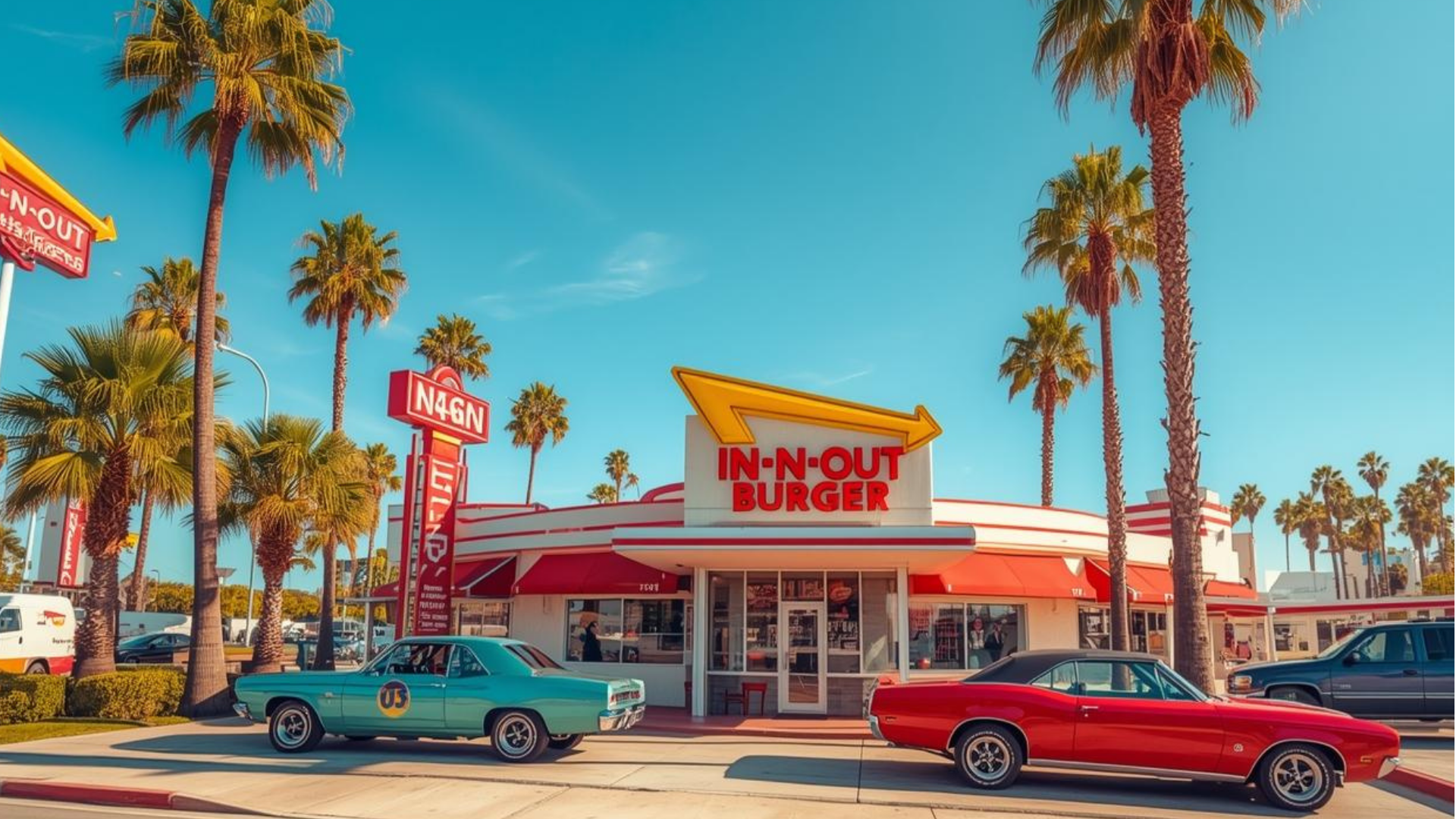
Brand & digital review / Marketing case study
On the menu: In-N-Out BurgerBig flavour.Digital appetite.
A marketing analysis of a cult regional brand built on freshness and simplicity — and the opportunity to make its digital experience as memorable as its in-store one.
THINKING
→
A classic brand. A fresh perspective.
01 / The challenge
Strong in store.
Thin online.
In-N-Out’s in-store promise is strong, but the digital experience reviewed in this case study is thin.
The review identified no ordering app or online ordering, limited website depth and heavy reliance on branded search. The biggest gap: “want to know” moments for people who are not already fans.
02 / The audience
Who’s hungry?
Families &
value diners
Wants an easy, affordable dinner that keeps the whole family happy.
The appetite: value + simplicity.
Young brand
loyalists
Treats the secret menu and late-night visits as part of the West Coast cult-brand experience.
The appetite: culture + connection.
Quality &
convenience seekers
Wants fresher fast food on the way home, with an experience that fits around his day.
The appetite: freshness + ease.
03 / Research & insights
What the market
is ordering.
Delivery and mobile ordering are shaping expectations. Customers increasingly want a frictionless digital experience.
The new default
Market trends / Case-study datatakeout weekly
weekly
weekly
Younger adults say they use takeout, drive-through or delivery more than a year ago.
Fast-food customers are likely to order via a smartphone app.
Delivery customers would order delivery using a smartphone app.
Source credited in the supplied case study: National Restaurant Association. Figures reflect the original research snapshot.
The brand’s digital footprint
Plenty of buzz.
Room for more depth.
- Organic appetite. The secret menu drives sharing, but the review found no blog or content hub.
- The essentials are covered. The mobile site includes the menu, nutrition information and a store locator.
- A convenience gap. The review identified no dedicated ordering app, despite strong interest in mobile ordering.
04 / Micro-moments
Catch the craving.
In-N-Out misses chances to turn micro-moments into immediate action, especially for digitally driven audiences outside its core fanbase.
Want to
know
Help new customers explore the menu, freshness and sourcing.
Want to
go
Help existing fans find their nearest restaurant.
Want to
do
Make choosing, customising and taking the next step easier.
Want to
buy
Deliver the familiar in-store experience fans already seek out.
Local marketing & geo-targeting
Make “near me” mean “next stop”.
The store locator — “Find a location near you” — is the core geo tool for capturing local intent and driving visits.
05 / PESTLE analysis
The bigger picture.
Political
The case study highlights California’s $20/hour fast-food wage requirement, effective 1 April 2024, with future increases possible.
Economic
Inflation shapes consumer value sensitivity.
Social
Secret-menu culture and brand loyalty encourage organic sharing, while younger audiences expect digital convenience.
Technological
The industry is investing in AI and drive-through technology.
Legal
The review notes legal action against unauthorised third-party delivery, citing brand and quality-control concerns.
Environmental
Packaging-waste reduction pressure is rising in California.
Context reflects the supplied case study. The Social factor draws on its audience and research findings.
06 / SWOT analysis
What’s working.
What’s next.
Strengths
- Loyal customer base
- Strong brand identity
- “Fresh, never frozen” positioning
- Efficient operations: fast service and high product standards
- Consistency across locations
- Private, non-franchised ownership
Weaknesses
- Limited geographic footprint
- High dependence on proximity to distribution centres
- Narrow menu options
- Limited digital and social engagement
Opportunities
- Expansion into new markets
- Menu innovation and seasonal products
- Partnership with delivery platforms
- Loyalty programmes and a broader digital presence
Threats
- High competition in the fast-food sector
- Health-conscious consumer habits limiting fast-food consumption
- Rising labour and ingredient costs
- Supply-chain disruptions
07 / Digital strategy recommendations
Same soul.
Fresh connections.
Bring the quality, simplicity and personality of the in-store experience into the moments that happen before and after a visit.
Four channels. One connected experience.Strengthen Instagram and use short-form video to capture micro-moments.
- Move from passive posting to a consistent content strategy.
- Highlight user-generated content, the secret menu and employee stories.
- Use Reels to reach younger, mobile-first audiences.
- Create short videos explaining the menu, freshness and sourcing.
- Build around “What to order”, “How it’s made” and “First time at In-N-Out”.
- Post on Instagram and embed the videos on the website.
E-marketing
Add a light, non-promotional email list.
- Offer an optional email sign-up.
- Focus on brand stories, store openings and merchandise.
- Use the channel to build an ongoing first-party relationship.
Website
Fill the gaps with menu explanations, sourcing and FAQs.
- Make menu information, sourcing and common questions easy to explore.
- Create a simple content hub without blog overload.
- Improve non-branded search visibility.
Mobile
Enhance engagement through a proposed mobile app and loyalty programme.
- Streamline ordering and make meal customisation easier.
- Improve convenience for tech-savvy diners who value efficiency.
- Strengthen the “want to do” micro-moment.
- Make movement between online and offline touchpoints easier.
- Reward long-term loyalty and encourage repeat visits.
- Explore points with exclusive deals or free items.
- Capture first-party data.
- Connect in-store behaviour with digital profiles.
08 / Proposed 12-month rollout
Next stop:
put it into practice.
A suggested sequence for the recommendations: strengthen the foundations, build engagement, then pilot the bigger digital investment.
Prep the
essentials
Audit priority journeys. Improve menu, sourcing and FAQ content. Review location pages and establish performance baselines.
Measure: content engagement, non-branded search traffic and store-locator actions.Serve the
stories
Launch a consistent Reels plan. Share customer and employee stories. Introduce the optional email list and embed useful video content.
Measure: video completion, saves, shares and email sign-ups.Test. Learn.
Repeat.
Validate app and loyalty demand. Test a prototype, assess operational fit and pilot in selected locations before considering wider rollout.
Measure: task completion, pilot adoption, repeat visits and customer feedback.Proposed implementation plan and measurement areas; these are recommendations, not reported campaign results.
Why this
approach
The brand is already strong at “want to go” and “want to buy” for existing fans.
The gap is “want to know” and “want to do” for newer, digitally driven customers.
A tighter website, short-form content and a first-party relationship can meet those moments while preserving the controlled in-store experience.